
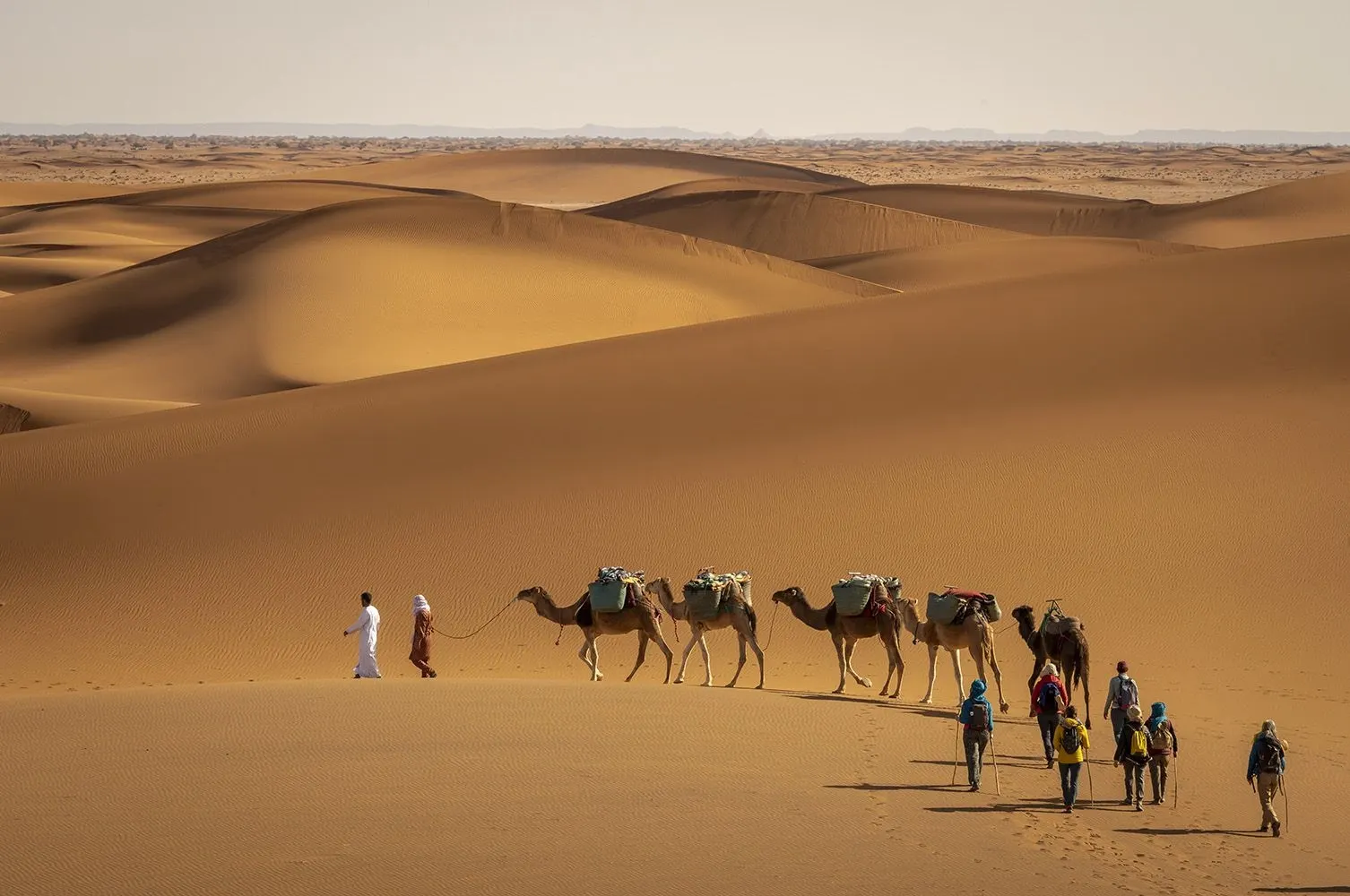
If you’ve spent any time researching a Sahara Desert trip in Morocco, the Erg Chigaga vs Erg Chebbi question has almost certainly come up — these two names appear again and again in every itinerary, forum, and guidebook. Both are genuine sand-sea dune fields. Both deliver that iconic, postcard-perfect Sahara image. And both are hugely popular among travelers planning a Morocco desert trip. But they are not the same experience, and choosing the wrong one for what you actually want can leave you disappointed.
This guide breaks down the real differences between the two — access and distance, size and scenery, crowd levels, seasons, and overall atmosphere — so you can choose the dune field that actually matches the trip you’re hoping to have.
The Short Answer
- Choose Erg Chigaga, reached via M’Hamid El Ghizlane, if you want a remote, quiet, authentically nomadic desert experience and have at least a few days to spare.
- Choose Erg Chebbi, reached via Merzouga, if convenience and ease of access matter more to you than solitude, or if your schedule is tight.
Now let’s get into exactly why.
Table of Contents
- Location and Access
- Size and Scenery: How the Dunes Actually Compare
- Crowds and Atmosphere: The Biggest Real-World Difference
- Erg Chigaga vs Erg Chebbi at a Glance: M’Hamid vs Merzouga
- Does the Season Change the Answer?
- Matching Trip Length to Each Dune Field
- Which One Should You Actually Choose?
- Frequently Asked Questions
Location and Access
Erg Chigaga
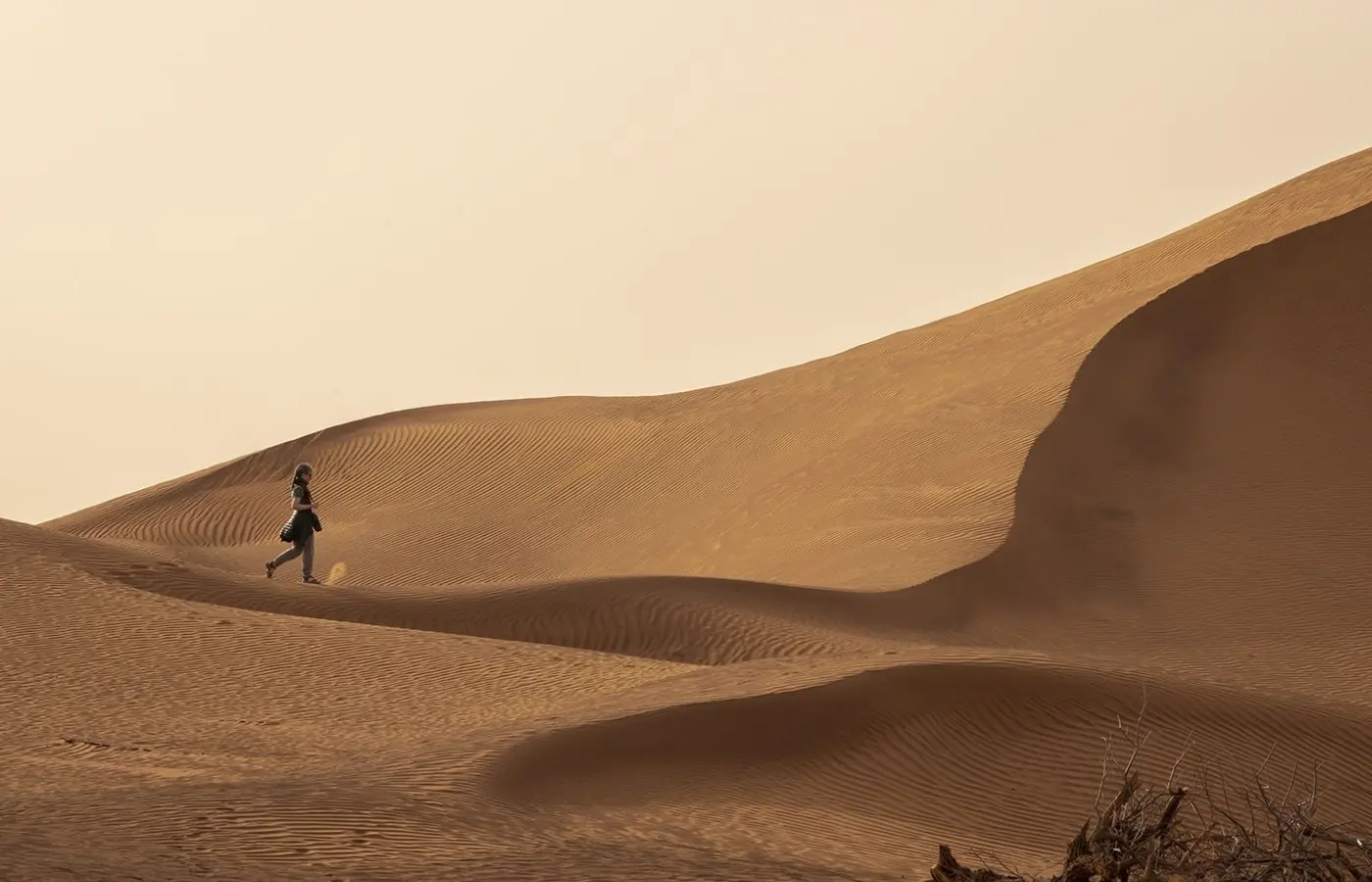
Erg Chigaga sits southwest of M’Hamid El Ghizlane, roughly 50–60 km into the open desert. There’s no paved road all the way to the dunes themselves — reaching them requires either a 4×4 vehicle crossing the pre-Sahara plain or a multi-day camel trek. That extra layer of effort is precisely what keeps Erg Chigaga quiet: it naturally filters out casual day-trippers who aren’t willing to commit the time.
If you’re coming from Marrakech, the journey runs first to M’Hamid (our guide on how to reach M’Hamid El Ghizlane covers this route in full detail), and from there onward by 4×4 or camel into the dunes.
Erg Chebbi
Erg Chebbi sits near Merzouga, close to Morocco’s border with Algeria in the southeast. Unlike Erg Chigaga, it’s accessible by paved road almost right up to the edge of the dune field, and Merzouga itself has grown into a fully developed small town with hotels, restaurants, and dozens of camps lining the dunes.
The core difference in one sentence: Erg Chigaga demands more effort to reach and rewards that effort with solitude; Erg Chebbi is one of the most accessible major dune fields in the entire Sahara.
Size and Scenery: How the Dunes Actually Compare
Both dune systems are visually stunning, but their scale and character are genuinely different.
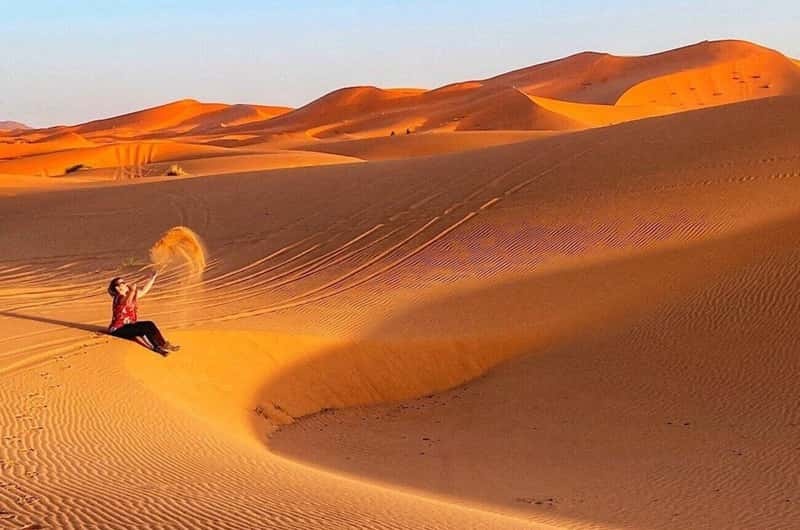
Erg Chigaga is Morocco’s largest true erg (sand sea), stretching approximately 40 km long and up to 12 km wide, with individual dunes reaching heights of roughly 300 meters in places. The scale here is difficult to overstate — you can trek for hours and see nothing but rolling sand stretching to the horizon in every direction, with barely another human trace in sight.
Erg Chebbi, by comparison, is smaller — around 22 km long and 5–7 km wide, with dunes reaching up to about 150 meters. It’s still a genuinely dramatic and beautiful landscape, and its more compact size actually works in its favor for shorter visits: it’s easier to explore meaningfully in a single overnight stay, though this also means it’s easier to spot other tour groups and camps nearby.
If raw scale, isolation, and a feeling of true remoteness matter most to you, Erg Chigaga has the clear edge. If you want dramatic, photogenic dunes within a shorter, more efficiently explored area, Erg Chebbi delivers that very well.
Crowds and Atmosphere: The Biggest Real-World Difference
This is where the two dune systems diverge the most, and it’s the factor that ends up mattering most to a lot of travelers once they’re actually there.
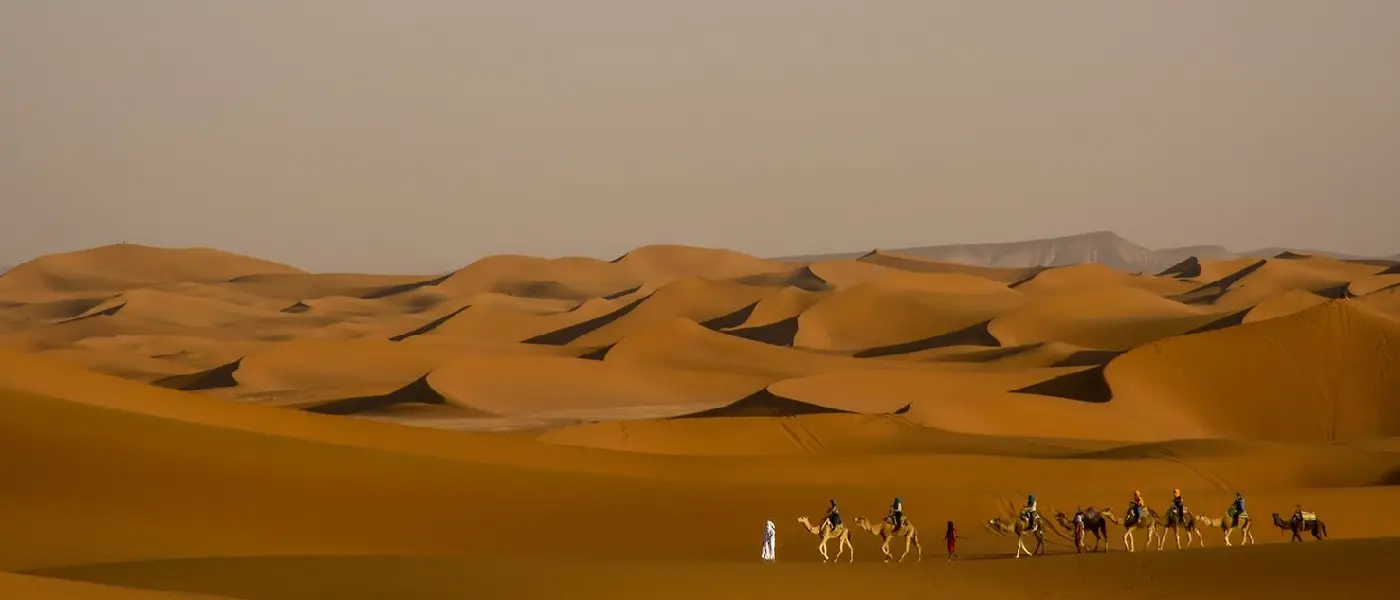
Erg Chebbi and Merzouga have become one of the most visited desert destinations in Morocco, largely because of how easily they’re reached from Fez and how developed the surrounding infrastructure has become. Expect camps clustered relatively close together, more vehicles moving through the area, and a livelier, more social camp atmosphere — genuinely appealing if you enjoy meeting other travelers along the way, but less so if silence and solitude are what you came for.
Erg Chigaga, by contrast, remains authentically quiet. Because reaching it demands a longer journey — typically an overnight stay in M’Hamid before continuing into the dunes — day-trippers are naturally filtered out. Most visitors here are on multi-day treks or dedicated overnight camp stays rather than quick group excursions, which shapes a slower, calmer, and more contemplative desert experience overall.
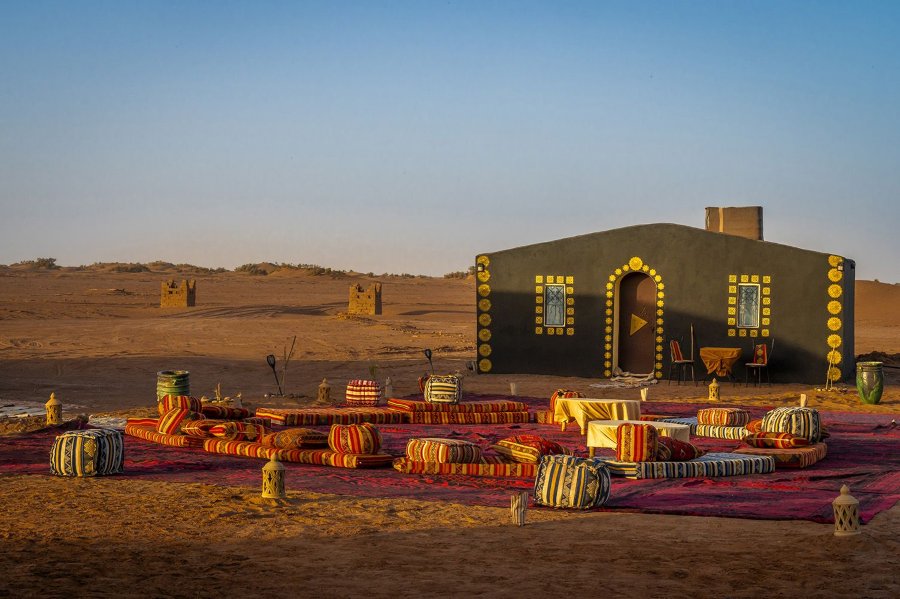
If you’ve pictured Sahara nights with nothing but starlight, silence, and the sound of wind moving over sand, Erg Chigaga is built for exactly that. Our nomad camp page describes what an actual stay near Erg Chigaga feels like, from arrival through to a night under the stars.
Erg Chigaga vs Erg Chebbi at a Glance: M’Hamid vs Merzouga
Choosing between the two ergs really means choosing between two different gateway towns and, ultimately, two different styles of desert trip entirely.
| Factor | M’Hamid → Erg Chigaga | Merzouga → Erg Chebbi |
|---|---|---|
| Distance from Marrakech | ~360–380 km | ~560 km |
| Access to the dunes | 4×4 or camel trek required | Paved road almost to the dune edge |
| Crowd levels | Low, remote, quiet | Higher, more developed |
| Dune scale | Larger, taller in places (~300m) | Smaller, more compact (~150m) |
| Typical trip style | Multi-day treks, overnight camps | Shorter overnight stays, day trips possible |
| Best suited for | Solitude, authenticity, longer trips | Convenience, shorter schedules |
Both are legitimate, beautiful choices, and neither is objectively “better” — the right option comes down to how much time you have available and what kind of desert experience you’re actually looking for.
Does the Season Change the Answer?
Slightly — and it’s worth factoring in. Both ergs share the same broad Saharan climate, but Erg Chigaga’s remoteness makes timing matter a little more. Because reaching it involves 50–60 km of open-desert travel and most visits are multi-day, the peak summer heat of July and August is felt more intensely there than on a quick overnight at Erg Chebbi, where you’re never far from town. In the mild months (roughly October through April), that difference disappears entirely, and Erg Chigaga’s longer treks become genuinely comfortable.
Spring can also bring windier days across the whole region, which matters more on multi-day routes. If you’re weighing months as well as dune fields, our month-by-month guide to the best time to visit the Sahara Desert from M’Hamid breaks down temperatures, nights, and seasons in full detail.
Matching Trip Length to Each Dune Field
Because reaching Erg Chigaga takes more travel time, it pairs best with itineraries of three days or more. Our tour options are built around exactly this range, from a quick taste of the desert to a full multi-day trek deep into the dunes:
- 1-Day Sahara Desert Tour to Erg Zahar from M’Hamid — a shorter introduction to the desert closer to town
- 2-Day Sahara Desert Trek in the Draa Valley from M’Hamid
- 3-Day Sahara Desert Trek to Erg Zahar from M’Hamid
- 4-Day Sahara Desert Trek to Erg Zahar & Draa Valley from M’Hamid
- 5-Day Sahara Desert Trek to Erg Zahar & Draa Valley from M’Hamid
If your goal is specifically to reach the deeper dunes of Erg Chigaga itself, a longer trek (three to five days) gives you enough time to travel out by camel or 4×4, spend one or more nights in the deep desert, and return without feeling rushed. If you’re tighter on time, our one- or two-day options based near M’Hamid still offer a genuine taste of the pre-Sahara landscape, even if they don’t push all the way into Erg Chigaga’s remote core.
Which One Should You Actually Choose?
- Choose Erg Chigaga near M’Hamid if: you have three or more days available, you want a quieter and more remote experience, and you’re drawn to the idea of a genuine nomadic-style desert trek away from crowds.
- Choose Erg Chebbi near Merzouga if: you’re short on time, you’re already traveling near Fez, or convenience and easier logistics matter more to you than solitude.
Neither choice is wrong. Knowing what each dune field actually offers, ahead of time, is what allows you to pick the trip that matches what you’re genuinely hoping to experience, rather than choosing based on which name you happened to see first in a search result.
Frequently Asked Questions
Erg Chigaga vs Erg Chebbi — which is better?
Neither is objectively better; they suit different trips. Erg Chigaga is larger, quieter, and more remote, ideal for multi-day treks and travelers seeking solitude. Erg Chebbi is smaller but far easier to reach, making it the practical pick for short schedules or trips routed through Fez.
Is Erg Chigaga bigger than Erg Chebbi?
Yes. Erg Chigaga is Morocco’s largest sand sea, roughly 40 km long with dunes reaching up to about 300 meters, compared to Erg Chebbi’s roughly 22 km length and dunes up to about 150 meters.
Which is quieter, Erg Chigaga or Erg Chebbi?
Erg Chigaga is significantly quieter. Its more difficult access — requiring a 4×4 or camel trek from M’Hamid — naturally limits day-trippers, while Erg Chebbi’s easy road access from Merzouga has made it considerably more developed and visited.
How far is Erg Chigaga from M’Hamid?
Erg Chigaga sits approximately 50–60 km southwest of M’Hamid El Ghizlane, typically reached by 4×4 vehicle or multi-day camel trek, since no paved road runs directly to the dunes.
Can you visit Erg Chigaga on a day trip?
It’s possible but not ideal, given the distance and terrain involved. Most travelers get significantly more value from at least a two- to three-day trip that includes an overnight stay in the dunes themselves.
Is Merzouga or M’Hamid better for a first-time Sahara visit?
Merzouga is generally easier for a first, shorter visit due to its accessibility. M’Hamid and Erg Chigaga are better suited to travelers who have a few extra days and are specifically seeking a quieter, more remote desert experience.
For more planning questions, visit our FAQ page, or browse the full tours page to compare trek lengths and options.
Final Thoughts
The Erg Chigaga vs Erg Chebbi decision ultimately comes down to time and temperament: how many days you have to spend, and whether you’re chasing convenience or genuine solitude. Both will give you that unforgettable, sweeping-dunes moment that draws people to the Sahara in the first place. But if it’s solitude you’re after — and you’re willing to trade a longer journey for a quieter, more authentic desert — Erg Chigaga, reached through M’Hamid, is very hard to beat.
Continue Reading
- How to Reach M’Hamid El Ghizlane from Marrakech, Fez & Ouarzazate
- Best Time to Visit the Sahara Desert from M’Hamid
- Camel Trekking in the Sahara: What to Really Expect
Have questions about which trip is right for you? Contact us or message us directly on WhatsApp at +212 621 440 716 — we’re glad to help you plan a Sahara trip that matches exactly what you’re looking for.