
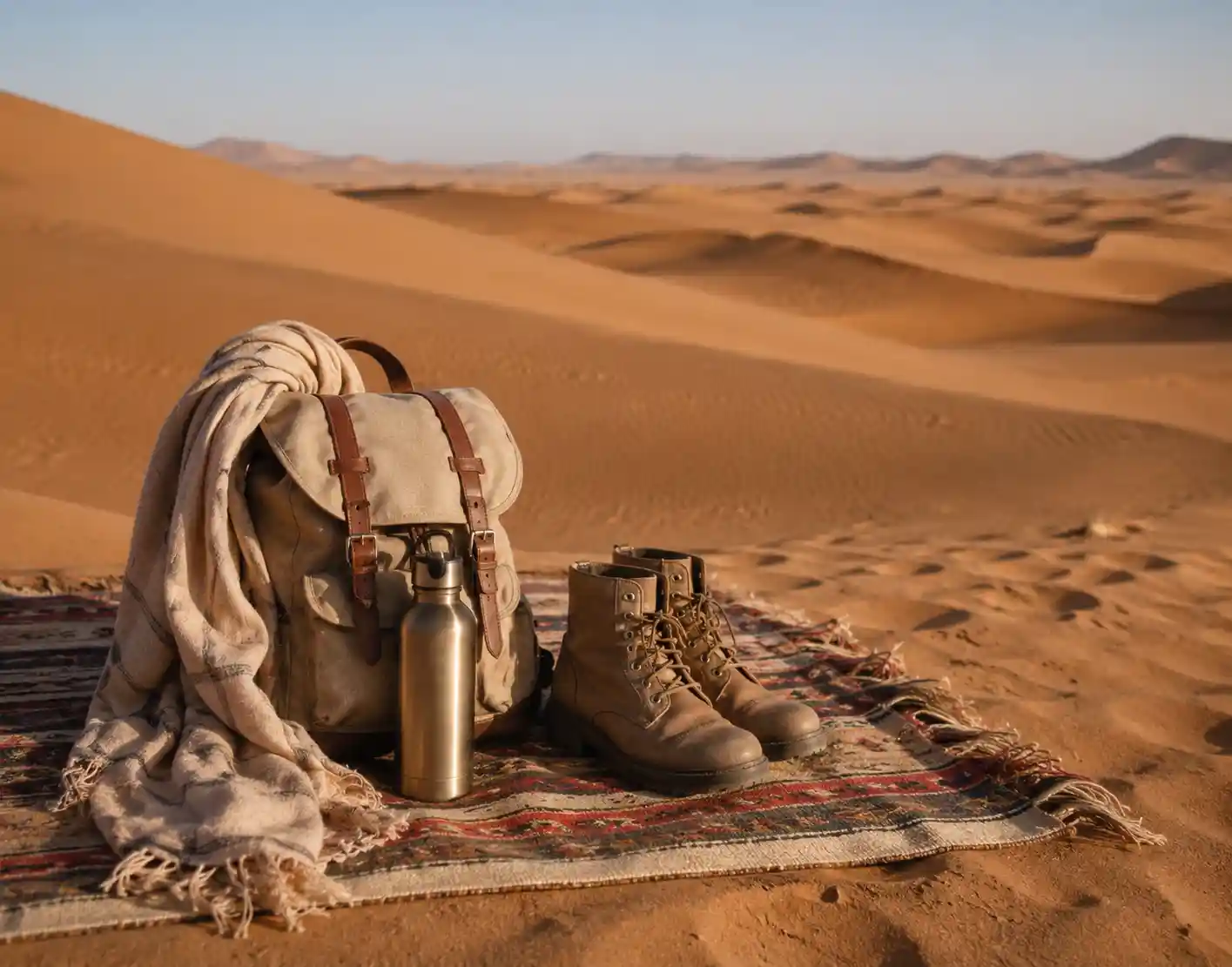
A good Sahara Desert packing list trips up more travelers than almost any other part of the trip. The instinct is to pack for “hot” — shorts, sandals, a swimsuit-adjacent wardrobe — and then arrive to discover that desert nights are cold, the sun is far more intense than expected, and sand gets into absolutely everything. Packing well for the Sahara isn’t about packing more; it’s about packing the right things for a place that swings from scorching midday sun to a genuinely cold, wind-exposed night within a matter of hours.
This list is built specifically around a Sahara desert trekking trip from M’Hamid, whether you’re doing a single-day dune excursion or a longer multi-day camel trek. It covers clothing, gear, health essentials, and a few things almost nobody thinks to bring until they wish they had.
Table of Contents
- Why Sahara Packing Is Different From Regular Desert Travel
- Clothing: The Foundation of a Good Desert Trek
- Gear Essentials for a Camel Trek or Desert Walk
- Sun and Skin Protection
- Toiletries and Hygiene in the Desert
- What to Pack by Season
- Camel Trek-Specific Essentials
- What NOT to Bring
- Sahara Desert Packing List: Quick Reference Checklist
- Matching Your Packing List to Your Trip Length
- Frequently Asked Questions
Why Sahara Packing Is Different From Regular Desert Travel
Two things make packing for the Sahara around M’Hamid different from, say, a desert road trip in the American Southwest: you’re likely traveling by camel or on foot for part of the journey, and you’ll almost certainly be sleeping outdoors or in a semi-open camp rather than an air-conditioned hotel. That combination means your gear needs to work hard in three very different conditions — intense daytime sun, a cold desert night, and the physical reality of walking or riding across sand for hours at a time.
Clothing: The Foundation of a Good Desert Trek
Daytime Layers
- Lightweight, breathable long-sleeve shirts — counterintuitively, long sleeves in light, breathable fabric (cotton or linen blends) protect better against sun exposure than short sleeves, while still keeping you cool.
- Loose, breathable trousers — avoid tight synthetic fabrics that trap heat. Linen or lightweight cotton works best, and looser cuts allow better airflow.
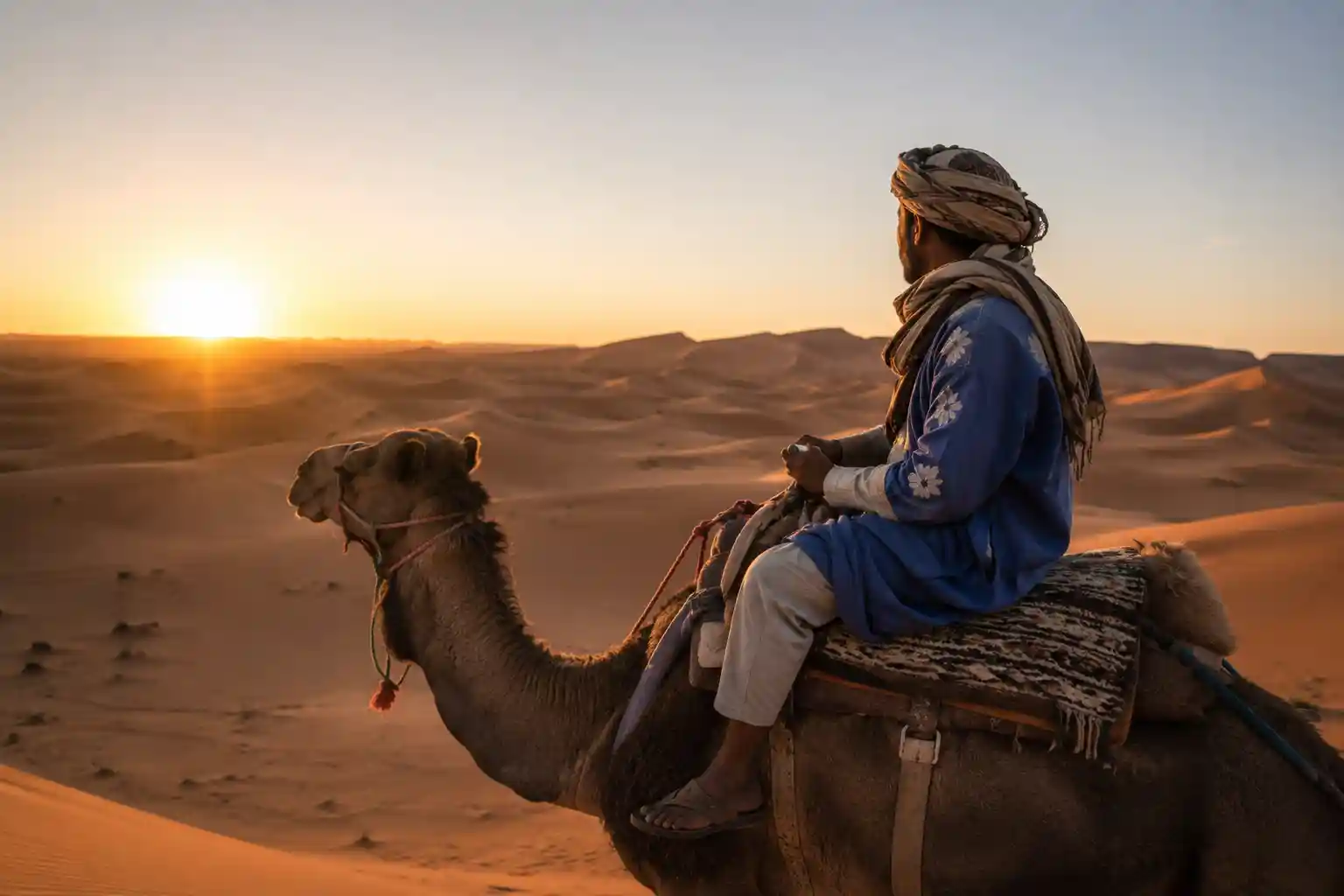
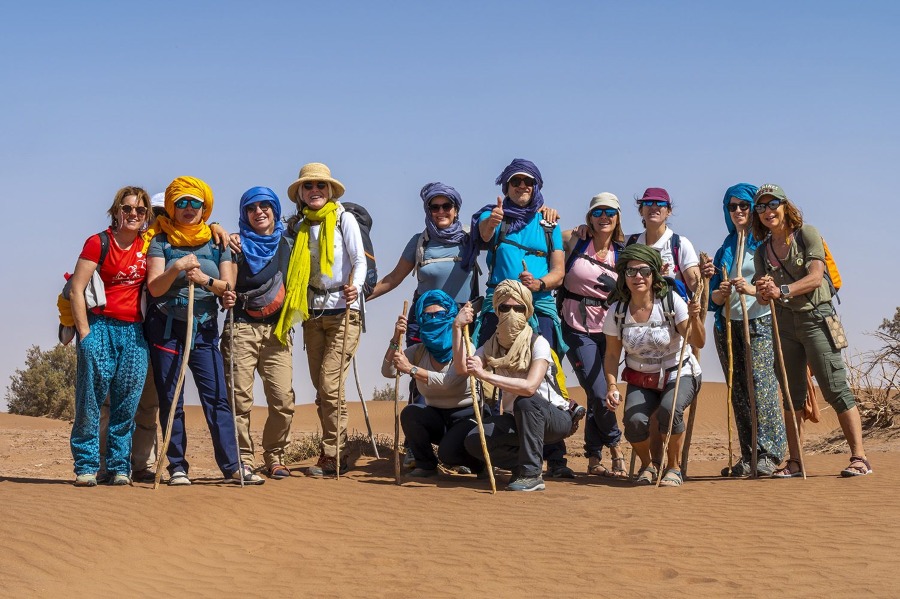
- A wide-brimmed hat or a traditional Berber-style turban/scarf — sun protection for your face, neck, and ears is non-negotiable. Many travelers pick up a locally made desert scarf (a “sheche”) once they arrive, which doubles as protection against blowing sand.
- Sunglasses with strong UV protection — the glare off pale sand is significantly stronger than most people expect.
Evening and Night Layers
- A warm mid-layer (fleece or a light down jacket) — even in the warmer months, temperatures drop noticeably after sunset. In winter, this becomes essential rather than optional.
- A warm hat and gloves — particularly important for December through February, when nighttime temperatures can approach freezing.
- Warm socks — sand holds heat during the day and loses it fast at night, so your feet get cold quickly once the sun goes down.
Footwear
- Sturdy, closed walking shoes or light hiking boots — sand doesn’t require rugged hiking boots, but you do want something closed-toe and comfortable, with good grip for walking on dunes and rocky terrain around camp.
- Sandals for camp — useful for evenings around the fire once the day’s trekking is done.
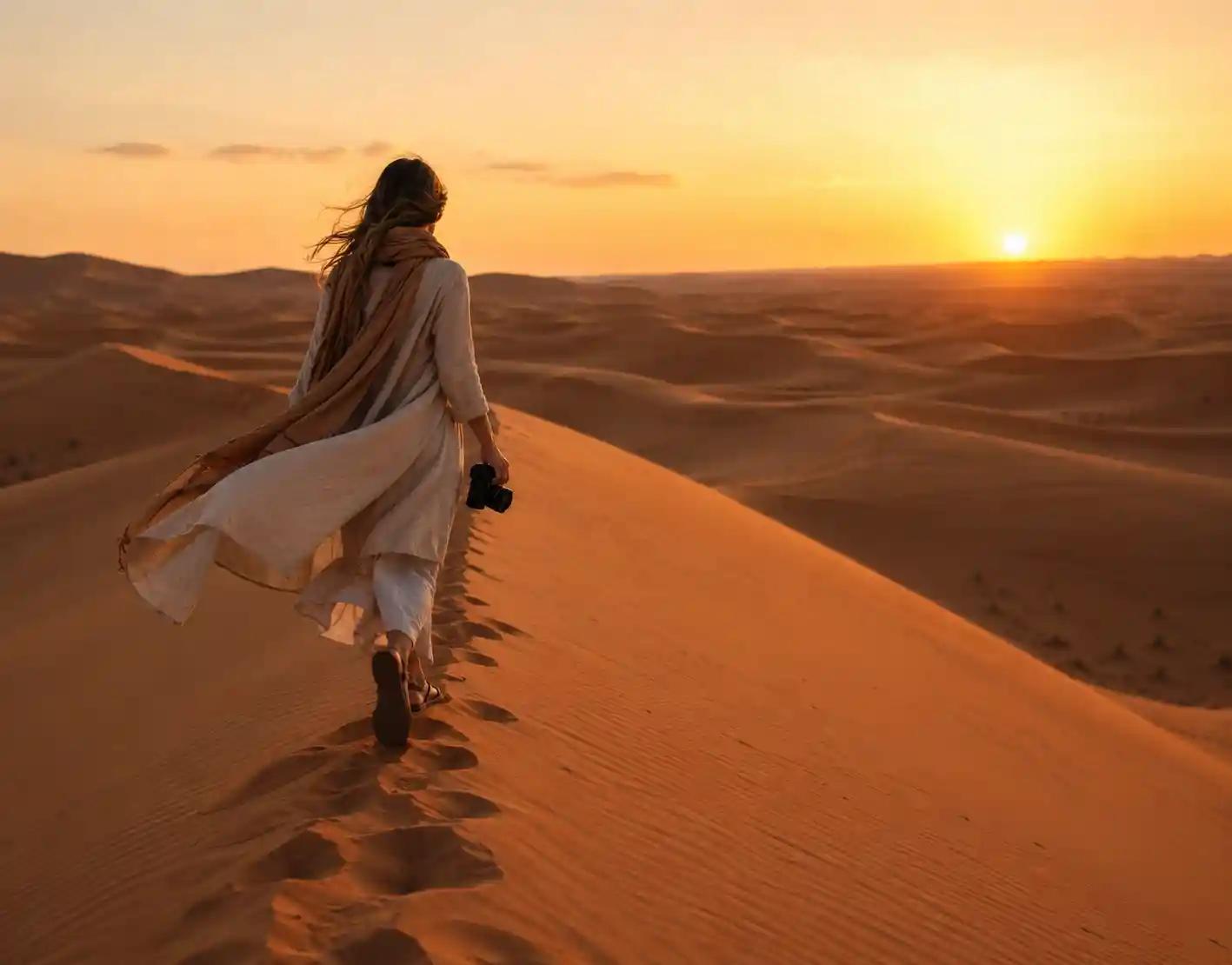
Gear Essentials for a Camel Trek or Desert Walk
- A comfortable daypack — for water, sunscreen, and anything you want accessible during the day’s trek, separate from your main luggage (which typically travels by camel or vehicle).
- A reusable water bottle — hydration is the single most important factor in a comfortable desert trip. Bring a durable bottle rather than relying entirely on single-use plastic.
- A headlamp or small flashlight — camps are often lit by lanterns or firelight only, and a headlamp makes moving around camp at night, or finding your tent, far easier.
- A power bank — most desert camps have limited or no electricity access, so a charged power bank keeps your phone or camera running for photos.
- A dry bag or large ziplock bags — sand and dust get into everything; separating your electronics and clean clothes from the rest of your pack is worth the small extra effort.
- A basic first aid kit — blister plasters, pain relief, rehydration salts, and any personal medication you take regularly.
Sun and Skin Protection
- High-SPF sunscreen (SPF 50) — reapplied throughout the day, not just once in the morning. The Skin Cancer Foundation recommends reapplying at least every two hours in strong sun — and desert sun, amplified by reflection off the sand, is about as strong as it gets.
- Lip balm with SPF — desert wind and sun dry out lips faster than most people expect.
- A cooling neck gaiter or bandana — useful both for sun protection and for keeping blown sand out of your mouth and nose during windier stretches.
Toiletries and Hygiene in the Desert
This is the section most packing guides skip, and it’s the one people wish they’d read. On a multi-day trek there are no showers between camps, and water is reserved for drinking and cooking — so a small hygiene kit does a lot of heavy lifting:
- Wet wipes or biodegradable body wipes — your daily “shower” on trek days. One pack per two to three days is a realistic ratio.
- Hand sanitizer — for before meals and after any stop along the way.
- A quick-dry travel towel — small, light, and useful at camps that do offer washing water.
- Biodegradable soap — if you’ll wash anything at all in the desert, keep it kind to the environment you came to see.
- A small trash bag — everything you carry in comes back out with you, wipes included.
A note for women travelers: pack any sanitary products you might need for the full trip, as they’re hard to find south of Zagora, plus a small opaque disposal bag. Some travelers also find a lightweight sarong useful for extra privacy when changing at semi-open camps.
What to Pack by Season
Your exact packing list shifts depending on when you’re traveling. If you haven’t settled on dates yet, our guide to the best time to visit the Sahara Desert from M’Hamid breaks down temperatures month by month — but as a general rule:
| Season | Key Additions |
|---|---|
| Winter (Dec–Feb) | Warm sleeping layers, gloves, thermal base layer, heavier jacket for night |
| Spring/Autumn (Mar–Apr, Oct–Nov) | Standard layering system below is generally sufficient |
| Summer (Jun–Aug) | Extra water capacity, lighter fabrics only, minimal night layers, strong sun protection |
Camel Trek-Specific Essentials
If your trip includes camel riding rather than walking, a few extra items make a real difference in comfort:
- A cushion or padded seat cover, often provided by your camp, but bringing your own small travel cushion can help on longer rides.
- Long, loose trousers rather than shorts — camel saddles and riding motion are far more comfortable in full-length, breathable fabric.
- A secure bag or pouch for your phone or camera that won’t bounce loose during the ride.
Curious what a day of riding actually feels like before you pack? Our guide on camel trekking in the Sahara: what to really expect walks through the whole experience in detail.
What NOT to Bring
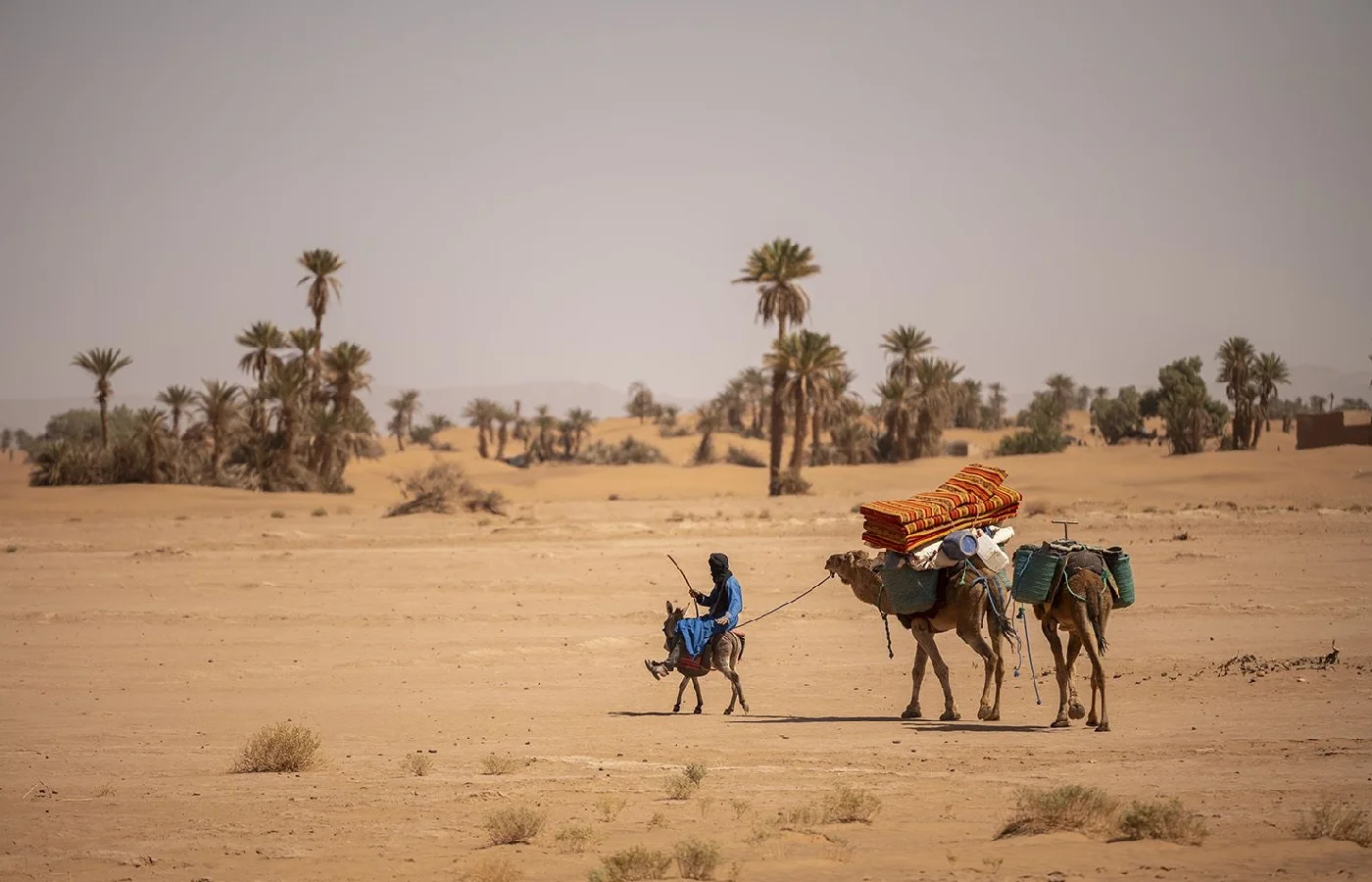
- Heavy, rigid suitcases — soft duffel bags or backpacks are far easier to load onto a camel or fit into a 4×4 than a hard-shell suitcase.
- Excess valuables — camps are generally safe, but it’s smart to travel light on jewelry or anything you’d be devastated to lose in the sand.
- New, unbroken-in shoes — always trek in shoes you’ve already worn a few times; a multi-day trek is not the moment to discover a blister-inducing new pair of boots.
Sahara Desert Packing List: Quick Reference Checklist
- Breathable long-sleeve shirts and loose trousers
- Wide-brimmed hat or desert scarf
- UV-protective sunglasses
- Warm mid-layer and hat/gloves (especially Oct–Apr)
- Sturdy closed shoes + camp sandals
- Daypack, reusable water bottle, headlamp
- Power bank, dry bag/ziplocks for electronics
- Sunscreen (SPF 50), SPF lip balm, neck gaiter
- Wet wipes, hand sanitizer, quick-dry towel
- Basic first aid kit and personal medication
- Soft duffel bag or backpack rather than a hard suitcase
Matching Your Packing List to Your Trip Length
A one-day excursion and a five-day trek call for slightly different priorities — a single day means fewer layers and less redundancy in clothing, while a longer trek means packing enough layers to stay comfortable across multiple nights without needing to wash clothes along the way. Our tours page outlines every available trip length, from a one-day dune excursion up to a five-day trek, so you can match your packing list to exactly how many days and nights you’ll actually be out in the desert.
Frequently Asked Questions
What should be on a Sahara Desert packing list?
The essentials: breathable long-sleeve layers, loose trousers, a sun hat or desert scarf, UV sunglasses, sturdy closed shoes, a warm layer for night, SPF 50 sunscreen, a headlamp, a power bank, a reusable water bottle, wet wipes, and a basic first aid kit — all packed in a soft duffel rather than a hard suitcase.
Do I need special shoes for a Sahara Desert trek?
Not specialized hiking boots, but sturdy, closed, comfortable shoes with decent grip are important, especially if your trek involves walking sections rather than riding the whole way.
What should I wear on a camel trek?
Loose, breathable long trousers and a long-sleeve top work best, along with a hat or scarf for sun protection. Avoid shorts, which are uncomfortable against a camel saddle over longer distances.
Is it really cold at night in the Sahara?
Yes, especially from December through February, when temperatures can approach freezing after dark. Even in warmer months, nights are noticeably cooler than daytime, so a warm layer is always worth packing.
Do desert camps have electricity to charge devices?
Most camps have limited or no mains electricity, which is why a fully charged power bank is one of the most useful items on this list.
For more trip-specific questions, our FAQ page covers everything from camp facilities to trek logistics.
Final Thoughts
The secret to a comfortable Sahara trip isn’t packing for extreme heat alone — it’s packing for a landscape that swings between two extremes in the same 24 hours. Follow this Sahara Desert packing list, layer smart, protect against sun and sand, and prepare for cold nights even if the days are blazing hot, and you’ll be genuinely comfortable for the entire trip.
Continue Reading
- Best Time to Visit the Sahara Desert from M’Hamid
- Camel Trekking in the Sahara: What to Really Expect
- How to Reach M’Hamid El Ghizlane
Still unsure what to pack for your specific trip dates or trek length? Contact us or message us directly on WhatsApp at +212 621 440 716 — we’re happy to help you prepare exactly right.